A New Model for Healing
Underdog Villages are the heart of our long-term vision – a compassionate, community-based solution designed to heal people in crisis while providing lifelong sanctuary for animals who need it most.
These villages are intentionally small, deeply relational, and rooted in dignity. Each one is designed as a neighborhood, not a shelter – where healing unfolds through stability, responsibility, purpose, and the sacred bond between humans and animals.
What is an Underdog Village
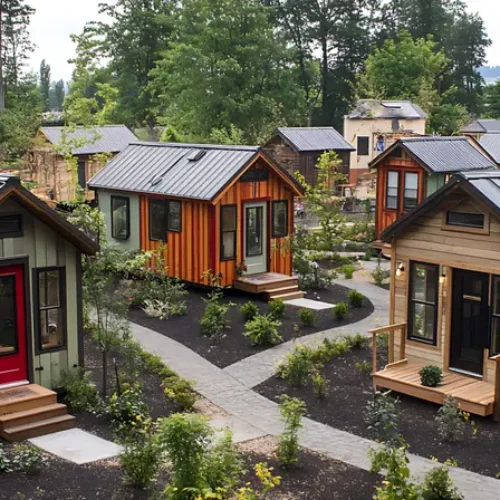
An Underdog Village is a small, intentional neighborhood designed for healing—not a shelter, not transitional housing.
Each village includes 6–10 tiny homes, each paired with animal companions, and a central community center that provides shared resources, support, and connection. Villages are built to offer stability, dignity, and a true sense of home for both people and animals.
This is a place to rebuild—together.
Why the Villages Work
Underdog Villages work because healing doesn’t happen in isolation.
By combining stable housing, animal companionship, meaningful responsibility, and ongoing support, villages:
-
Reduce isolation and repeat crisis cycles
-
Increase long-term recovery outcomes
-
Build routine, accountability, and purpose
-
Create belonging rather than dependency
Healing happens in relationship—day by day, life alongside life.
Who the Villages Serve
Underdog Villages serve people navigating crisis or major life transitions, including:
-
Housing insecurity or homelessness
-
Addiction recovery
-
Abuse or trauma recovery
-
Grief and loss
-
Mental or physical disabilities
Villages also provide lifelong sanctuary for animals who are often overlooked:
-
Senior and hospice animals
-
Animals labeled “unadoptable”
-
Animals needing stability, purpose, and consistent care
Humans and animals are intentionally matched to support mutual healing.
Why This Model is Different
Most systems separate housing, treatment, employment, and animal welfare.
Underdog Villages integrate them.
What makes this model different:
-
People are never separated from their animals
-
Animals receive lifelong sanctuary, not temporary placement
-
Housing, healing, and purpose exist in one place
-
The human–animal bond is central—not supplemental
This is a dignity-first, relationship-centered approach to recovery.